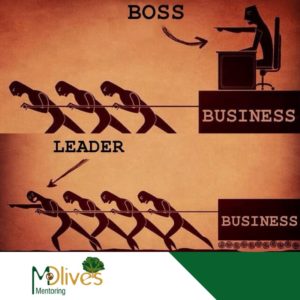

 For a small team one would not think that team building is of much significance neither would they be keen to spend money and time on that. But my view on this was challenged this week when the owner of a Business that has less than ten employees asked me to facilitate a staff capacity and team building retreat for the team. I gladly took it up with my focus biased towards capacity rather than team building. At the end of the retreat I asked the team to fill in an evaluation tool that had four questions, two of which were; ‘What stood out for you during this retreat? and, ‘What improvement would you want to see in the next retreat? For the former 80% of the team indicated team building activities is what stood out for them, mind you I was biased so the activities were few. For the latter an almost equal percentage indicated that they would want more team building activities and less of training in the next retreat, I was embarrassed. While I tackled other sessions during this retreat that were quite relevant and interesting, it turned out that these ‘fun’ activities that can pass for ‘time wasters’ is what the team appreciated most.
It is no wonder that team building is one of the most widely used group-development activities in organizations and is said to have the strongest effect (versus financial measures) for improving organizational performance. With the time we spend with our employees, the benefits of investing time and money in teambuilding cannot be overemphasized. Some of the benefits of team building include; responsive and meaningful communication, facilitates collaborative and motivated work culture, identifies and develops strengths of the team members, creates self-awareness of one’s own strengths and weaknesses, helps in problem-solving and decision making, boosts morale and job appreciation, helps in creativity, innovation and out of the box thinking, enhances productivity and improves organizational performance.
You may consider one or more of the following approaches;
- Interpersonal-relations; This emphasizes increasing teamwork skills such as giving and receiving support, communication and sharing. Teams with fewer interpersonal conflicts generally function more effectively than others.
- Problem solving; This emphasizes identifying major problems within the team and working together to find solutions. This can have the added benefit of enhancing critical thinking & creativity
- Role clarification; This emphasizes improving team members’ understanding of their own and others’ respective roles and duties. It also emphasizes the members’ interdependence and the value of having each member focus on their own role in the team’s success.
- Setting Goals; This emphasizes the importance of setting clear objectives, individual, team and organizational goals. Team members become involved in action planning to identify ways to define success and failure and achieve goals.
I applaud my client who did not hesitate to invest time and money in building their ‘small team’; it was worth every minute and every penny. Isn’t it possibly time that you considered investing time and money in your valuable team regardless of how few/many they are?[/vc_column_text][/vc_column][/vc_row][vc_row][vc_column width=”1/2″][vc_single_image image=”835″][vc_column_text]Mary Kamore is the Founder and Lead Consultant, M_OliveS Mentors[/vc_column_text][/vc_column][vc_column width=”1/2″][/vc_column][/vc_row]
 When I was in high school I went through a very wearisome experience which, ironically, was a lifetime opportunity. The president of the Republic of Kenya then, Daniel Toroitich Arap Moi, had been kind to our school by supporting the construction of a modern Dinning hall and in addition buying goodies for all the girls, as many as we were. To appreciate him for his kind gesture a student was to write to him a thank you letter, a minimum of one and a half foolscap. This student happened to be me, not because I was the best in writing letters but mostly because I was the school head girl (captain if you want) and according to my headmistress, I was the best placed to represent the school. This was definitely a privilege, a lifetime opportunity. But the tedious part was nothing to celebrate. I did not have a good handwriting and so you can only imagine how difficult it was for me to write the letter. When I wrote the letter the first time, the headmistress looked at it and said, “Mary I can’t read this letter and the President can’t read it either, write again”. This happened three times and each time it was getting worse and both of us were getting more frustrated. At the fourth time she walked over to me placed her hand on my shoulder and told me, “Mary I believe you can write better than this, Just try one more time; I will be right here beside you”. That did it and the next piece I wrote was good enough to be handed over to the president! My relationship with my headmistress moved to another level; she was more than just an authority, but a mentor.
 This week I have been reading a book ‘Champion’ by David Ndegwa a former Golden Gloves amateur boxing champion and High School teacher. David uses his experience as a boxing Champion to demonstrate what it takes to fight life’s battles and become a Champion. Though the book was given to our 13 year old son as a gift upon his transition to adolescent I am learning lessons that apply to everyone not just a 13 year old.
 This week I experienced two related episodes but in different settings. I was having a chat with a business owner and she made this comment, “I am glad that, after five years, my Business is now past the delicate stage. I was away for the last one week attending to some personal matters and I returned to find my business still on. It did not close down! But I am just not sure I can be away for longer than that. It seems hard to predict what can happen to my Business at any one point in time”
 My mentoring relationship with Mercy (not her real name for confidentiality purposes) is unique because it’s neither one of those I planned for nor is it under a structured program. Mercy had just come back from the UK after being there for about 10 years. During this time she undertook a HR course and worked in the same line before deciding to come back home. As she was wondering where to go to church and find a mentor, her friend who is known to me invited her to our church and that is how we met. Young, pretty and educated Mercy was determined to find a footing in her own country. She further informed me she was looking towards achieving three things;