

MENTORING MATTERS

[vc_row][vc_column][vc_column_text]

 A few days ago I had a chance to do what I love most-training mentors. This was not an ordinary group of participants but a group of youth, 30 years and below, who are interested in changing the lives of other youths within their circle of influence, thanks to ELNET-Ethical Leaders Network (ELNET) which exists to influence leaders both in the corporate and religious circles towards Godly transformation. As I conducted this training via zoom, which is the ‘new normal’, I was excited not just because these are youths who have decided to step out of the ordinary but also because of their resolve -the current crisis notwithstanding. Their presence in this virtual learning moment was clear proof of their determination.

My topic for the day, ‘Qualities of a good mentor’ is what I want to share with you this weekend.

What is mentoring?; While it is very difficult to provide an authoritative definition of mentoring, I will give a very basic definition of what mentoring is; ‘Mentorship refers to a relational experience in which one empowers another by sharing God given resources (Knowledge, skills, experience etc)’. Mentoring is intentional, empowering and unique.

“A lot of people have gone further than they thought they could because someone else thought they could” Zig Ziglar

Biblical Basis for mentoring; Several verses in the Bible help us to appreciate that mentoring matters. We look at just but a few of these verses.

  • 2 Timothy 2:2 (NIV); ‘And the things you have heard me say in the presence of many witnesses entrust to reliable people who will also be qualified to teach others’.
  • 1 Thessalonians 2:8 (NIV); ‘So we cared for you. Because we loved you so much, we were delighted to share with you not only the gospel of God but our lives as well’.
  • Proverbs 13:20 (NIV); Walk with the wise and become wise, for a companion of fools suffers harm.

So what are the qualities of a good mentor?

First understand that you are unique and so your mentoring will be unique. There are however, key characteristic and behaviors that build a foundation for good mentoring.

  1. Be Godly; As a mentor you should be one that reminds your mentee about Jesus. Let the quality of your life call them back to connection with Christ. How?
  • Desire to be a true disciple of Christ; If you are to promote the work of Christ in another’s life, then you should be pursuing the same goal yourself.
  • Be settled in God; Have deep satisfaction in keeping company with God. Your life should be secure, unthreatened and a source of deep joy.
  • Be anchored in the Bible; Godly mentors are at peace with the Bible.
  • Sensitive to the Holy spirit; This gives you a desire to not only live a life that pleases God but you are also able to identify what the Lord is doing in your mentee’s life.
  1. Open communication & Information sharing; Make contact regular and meaningful, establish a pattern of mutual information exchange
  2. Trustworthiness & Confidentiality; Be trusted with information
  3. Respect & approachability; Let them know you respect their time and opinion-acknowledge their skills’ and progress. Be available and interested.
  4. Appropriate feedback; Let them know how you feel in a gentle and respectful manner. Timely, assertive, empathetic and honest communication is very important.
  5. Technical expertise; Remain up to date and current with your own knowledge.
  6. Commitment & Supportive; Invest enough time in the relationship .Work on being motivating, encouraging, positive and empowering.
  7. Desire to help; Make sure you are genuinely interested in helping someone else, without a promise of help in return.

While the above list does not exhaust all the qualities of a good mentor it communicates a number of things to your mentee;

  • She/he is valuable enough for you to spend time with.
  • That you will be honest with him/her
  • That you are engaged and supportive of his/her development and success.
  • Most importantly that you are ready to help him/her identify, and promote the work of God’s spirit in their lives assisting them to access God’s resources for their growth and development.

Remember mentoring is a two way Street-both mentor and the mentee benefit from the relationship- long life relationship and mutual growth.

[/vc_column_text][/vc_column][/vc_row][vc_row][vc_column width=”1/2″][vc_single_image image=”835″ label=””][vc_column_text]Mary Kamore is the Lead Consultant MoliveS Mentors[/vc_column_text][/vc_column][vc_column width=”1/2″][/vc_column][/vc_row]
Share this cohort:

Anything can change!

[vc_row][vc_column][vc_column_text]“Anything can change, Mary, anything and I mean anything!” These were the words my friend, Ann, told me this week when we were discussing how quickly things are changing, making it nearly impossible to catch up with the speed of change. What once seemed strong, dependable and immovable has been shaken to the core. We are experiencing a never imagined change in all aspects of our lives; the way we work, do Business, forge relationships, run Governments, run churches & other religious entities, deliver essential services like health and education, etc.  Yes, my friend is right, ‘Anything can change!
I got to ask myself; What does it mean to be a leader at a time like now? Be it a Business leader, company leader, church leader or a Government leader- my guess is there is nothing in your leadership past that is quite like the current COVID-19 pandemic. So, just how do you navigate this pandemic as a leader?

In the Old Testament, Exodus 14, the story of Moses at the Red Sea is one of great drama. The people are caught between the charging armies of the Egyptians on one side and the feared depths of the sea on the other. Yet, still God provides a way through – not by withdrawing either threat but calling Moses to lead his people into the very heart of the chaos of the sea. The walk across the Red Sea, surrounded on both sides by the water, must have been a terrifying place. The temptation to lose faith as individuals, and a group, and take the chance of facing the known threat of the army must have always been in the minds of the people.

I see three key factors (apart from fear) that kept the group from turning back: the clear vision from their leaders, the presence of their leaders with them and the sense of being a community on the move together. Note the focus of the leaders was on leading ‘through’, not ‘into’. It is therefore essential that as a leader you work hard at both visioning, presence and care.

At times like this everyone is stressed, and it is vital that as a leader you come up with simple clear strategies of how your organization may not just hold together, but move forward to a new future through this catastrophic event.  In the case of Moses the the practices of leadership that helped most in the situation were: their faith, vision, support for people-acknowledging they are in a place of fear and not thinking they can do it all alone-working with the people

There are many ways your situation is not like the Red Sea, but I hope this provides you a chance to reflect on your own experiences. We are all going to be changed by this experience, but we will also need to acknowledge that our security can only be assured by faith, not in the clarity of what is going to happen next but rather in the one who says “Follow me” into the messy reality of life and “I will be with you always.”

My prayers are with all who have accepted the responsibility of leadership in these difficult times; You will overcome!

To all of us remember the words of my friend; Anything, anything, can change![/vc_column_text][/vc_column][/vc_row][vc_row][vc_column width=”1/2″][vc_single_image image=”835″ label=””][vc_column_text]Mary Kamore is the Lead Consultant MoliveS Mentors[/vc_column_text][/vc_column][vc_column width=”1/2″][/vc_column][/vc_row]

Share this cohort:

Business Continuity Planning (BCP)

[vc_row][vc_column][vc_column_text]You possibly know about Business Continuity Planning (BCP) and that it helps a business continue operating in the event of major disasters e.g. fires. However, and possibly like me, less did you know that a disaster can get this close and hit this hard leaving your Businesses on its knees-that is what COVID-19 has done. It is, therefore, now time to not only think about BCP but to get it done as soon as possible.

And so we get to ask ourselves; What is Business Continuity Planning (BCP)? Why do you need it? And how do you do it?

What is Business Continuity Planning (BCP)? ; It is the process a company undergoes to create prevention and a recovery system from potential threats such as natural disasters (fire, floods) or cyber-attacks, relevant example being the current COVID-19 crisis.

Longevity in business is about being able to reinvent yourself: Satya Nadella

Why Business Continuity Planning (BCP)? ; Becoming an entrepreneur is all about taking risks. In order to ensure that your business is sustainable, you need to put in place systems that can prevent threats whether internal or external that may try to interfere with your day to day operations. BCP ensures that personnel and assets are protected and are able to function quickly in the event of a disaster. Some benefits of BCP include;

  • It enables your business to be well prepared for a disaster
  • It gives your business more flexibility so that it can adapt to changes in future
  • It stops the staff from panicking in case the business is faced with a threat
  • It helps to minimize losses

During the COVID-19 crisis BCP will help you to; 1) Establish the risk profile of your business and the level of vulnerability to COVID-19 in terms of its impact on your People, Processes, Profits and Partnerships (the “4Ps”).

  • People: lives of workers and family members
  • Processes: enterprise operations
  • Profits: revenue generation
  • Partnerships: enabling environment to carry out business operations

and 2) Develop an effective risk and emergency arrangement for the business.

“It takes years to build a Business but only minutes to lose it” Warren Buffet

How do you write a Business Continuity Plan during this COVID-19 crisis? BCP is generally conceived in advance and involves input from key stakeholders and personnel. It is important to consider using a Business Continuity Planning (BCP) tool. Let us look at a tool that is mostly targeted at smaller enterprises with limited resources and structured in two parts.

  • The first part of the tool is risk assessment that you can quickly do. It establishes the level of risk/vulnerability to your enterprises.
  • The second part of the tool is six-step processes to assist you develop your own Business Continuity Plan.

Part 1: Establish your risk profile (Self-assessment); Here you need to ask yourself questions around the 4P’s; ‘People, Processes, Profits and Partnerships’. You will then need to estimate your vulnerability level by use of a Risk Matrix which will help you do a comprehensive assessment and hence identify which of the 4P’s (people, processes, profits and partnerships) your business is most vulnerable to (and which aspects in particular).

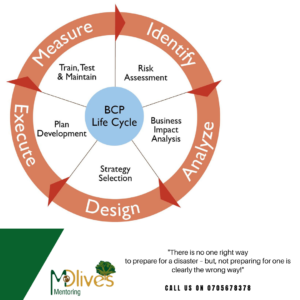
Part 2: Develop a six-step COVID-19 BCP; The following are the six steps needed to establish your business continuity plan (BCP):

Step 1: Identify your key products/services.  What are your most important products/services? Consider the following criteria:

  • Share of income they generate
  • Amount of clients demanding them; and
  • Cost of non-delivery (what happens if you don’t deliver): negative financial, productivity and reputational consequences.

Step 2: Establish the objective of your BCP. What do you want to achieve by establishing your BCP?

Consider the following; What departments will the plan cover? What are the outcomes of a successful plan? Which milestones should we track?

Step 3: Evaluate the potential impact of disruptions to your business and workers/staff. How long can interruptions last before becoming intolerable? What are the resources required and who are the suppliers/partners/ contractors needed to conduct key operations?

Step 4: List action to protect your business by using the 4Ps framework.  Consider actions to minimize risk to your: People(lives of workers and family members), Processes(enterprise operations), Profits(revenue generation) and Partnerships(enabling environment to carry out business operations).

Step 5: Establish contact lists. Note that most of your activities will be non-physical (Mobile phone calls, texts, WhatsApp calls, zoom meetings, Googlemeet etc).  Make sure you have accurate and updated lists of all your key stakeholders (suppliers/partners/ contractors).

Step 6: Maintain, review and continuously update your BCP; Once you have a business continuity plan in place, don’t forget to update and adapt it regularly. A BCP that is not constantly tested and updated will be of little help. Changes have to be monitored; impacts, risk and continuity strategies need to be reevaluated.

“The only thing harder than planning for a disaster is explaining why you didn’t”

“You never want a serious crisis to go to waste” Obama Chief of staff

 [/vc_column_text][/vc_column][/vc_row][vc_row][vc_column width=”1/2″][vc_single_image image=”620″ label=””][vc_column_text]Mary Kamore is the Lead Consultant MoliveS Mentors[/vc_column_text][/vc_column][/vc_row]

Share this cohort:
Women-Mentoring-2-Copy

Mother’s day 2020-Celebrating Mama Entrepreneur

[vc_row][vc_column][vc_column_text]The COVID-19 crisis is predicted to have far-reaching consequences that will be felt for years to come. We have started witnessing its grave impact on the global economy, particularly, on business entrepreneurship.
As we celebrate all Mothers this week, It is important to note that the impact of the COVID-19 pandemic is not gender neutral, as it affects men and women differently. Globally, women are more vulnerable to economic shocks wrought by crises such as the corona-virus pandemic.

Why are women at risk?  Firstly, women are more likely to lose their jobs than men. In many countries, women’s participation in the labour market is often in the form of temporary employment. Secondly considering that most women rely on small businesses for their livelihoods, due to Covid-19 majority are extremely stressed; low sales, reduced or closed markets, limited mobility, no income alternatives, and no safety nets. Most importantly women have to balance between being a mother (mama) and career/Business.

Balancing Family and work

With families at home; children not going to school and both men and women working from home you will still find more women jumping into household chores than men. Sometimes the so called ‘online learning’ for your children is not ‘online learning’ until it is combined with ‘mama learning’ But as a ‘mama’ entrepreneur you cannot afford to lose the opportunity to meet the sharp increase in demand that has just come your way during this Covid-19. Furthermore you just cut your salary by half and have asked your staff to work part-time as you expect tough times ahead. Hard as it may be for you, keep it there and do whatever it takes to balance both family and work. They both desperately need. Never doubt your strength to give each sufficient attention.

Going digital

Did you know that you can retain a bulk of your clientele without necessarily having to be there physically? It is now the time to focus heavily on providing more of digital marketing services and this allows you to work remotely. The biggest lesson here is to invest just a little in a digital skill set.

As a ‘Mama Entrepreneur’ you can chose to block out the first half of your day (or more/less) managing/running your Business remotely and the second half of your day as time for meditation, reading, and bonding with loved ones. And there you go; Family and work done. “be sure to use this time wisely. Learn something new, sharpen your skills and be grateful for the life you have.” Happy Mother’s day!

Help another

“Virtue cannot live in isolation: Neighbors are sure to grow around it”. Regardless of your situation, remember you have something to offer as well—a connection, an insight, a skill, an encouragement etc. You will find women around you who believe there is no hope or solution in this current crisis. Be there to give them hope. What about educating that ‘mama’ on how she can build a new stream of income? What about encouraging her to pass the knowledge already gained to others within her reach?  There is enough success to go around and if everyone goes out of their way to help one another, we can truly improve each other’s quality of life. So reach out to someone and offer to help, it doesn’t have to cost you money and you know what? Help has a way of coming back to you!

Self-care

As a ‘Mama Entrepreneur’ trying to do it all can be a recipe so know your limits and enforce them. Self-care is not selfish. Repeat-Self-care is not selfish! You need you strong and healthy to be of service to all those looking up to you and hence the need to be fueled for the long haul. Apply these few tips;

  • Make sleep a non-negotiable; Give yourself the best gift you can during this stressful time and get enough sleep
  • Shower and get dressed every single day; Showering and getting dressed (preferably into NON-pajama clothing) communicates to your brain and subconscious that it’s time to get to work.
  • Write a task list for each day and stick to it; Either at the end of your workday or first thing in the morning, compose a list of all your tasks for the day.
  • Talk to at least one human every day; It’s no news that human beings need connection. We literally can’t survive without it. You don’t need a specific reason for talking/calling someone – simply connecting is all the reason you need.
  • Dust off ideas from your “Someday Maybe” list; Guess what? Now that you’re at home for who knows how long, it’s the perfect time to dust off those “someday maybe” items and turn some of them into “this week for sure” items.
  • Watch something every day that makes you laugh; Laughter is good for the body and good for the soul. And I think we all need a lot more of it these days, wouldn’t you agree? Treat yourself to something every day that will make you laugh. Your body will thank you!
  • Devise your own personal mantra for getting through this; When you say something over and over again relentlessly in your mind, your brain begins to support that thought or belief. What will you train your brain to believe during this crisis? Possibly something like: “I will come out of this stronger and wiser than ever.”

“Self-care is not a waste of time. Self-care makes your use of time more sustainable.”– Jackie Viramontez[/vc_column_text][/vc_column][/vc_row][vc_row][vc_column width=”1/2″][vc_single_image image=”835″ label=””][vc_column_text]Mary Kamore is the Lead Consultant, Molives Mentors[/vc_column_text][/vc_column][vc_column width=”1/2″][/vc_column][/vc_row]

Share this cohort:

Business Model Canvas

[vc_row][vc_column][vc_column_text]

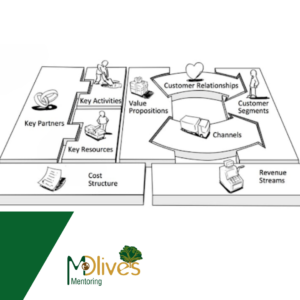
What and Why a Business Model Canvas?

A ‘Business model’ is a description of how your business makes money-it describes how a Business creates, delivers and captures value.

A Business Model Canvas is a great way of mapping out an idea, allowing it to be understood, tested and improved. The tool is a single page with nine connected boxes, which show how all parts of your business work together for success. It can be sketched anywhere – on a whiteboard or notepad. A Business Model Canvas can be used when starting a new Business or when updating an existing Business idea

When filling out a Business Model Canvas, it is important to brainstorm and conduct research on each of the nine elements.  This week we discussed four of the elements.

  1. Customer Segments

In this building block, you enter the different customer segments that you will serve. These are the groups of people or companies that you are trying to target and sell your product or service to.

Segmenting your customers based on similarities such as geographical area, gender, age, behaviors, interests, etc. gives you the opportunity to better serve their needs, specifically by customizing the solution you are providing them. One really important point to get across here is that customers don’t exist for you, but rather you exist to serve your customers.

Question; Which customers and users are you serving? Which jobs do they really want to get done?

2. Value propositions

At the center of your Canvas is the Value Proposition box. Inside this very important box you write down your unique solution (product or service) for a problem faced by a customer (that which creates value for the customer segment). A value proposition should be unique or should be different from that of your competitors.

Think about a ‘Unique Value Proposition’ (UVP)-why are you different and worth getting attention? What are you offering them? Some common value propositions are include; High performance, Ability to customize, Design, Price, Convenience etc.

Good news! You don’t have to get this perfect right away. Like everything on the Canvas, start with a best guess and perfect as you go.

  1. Channels

In this block you describe how your company will communicate with and reach out to your customers. How does each customer want to be reached? How are your products and services delivered to the market?

Channels are the touchpoints that let your customers connect with your company. They play two main roles; (i) raising awareness of your product or service among customers and (ii) delivering your value propositions to them.  There are two types of channels

  • Owned channels: This includes your company/business website, social media sites, in-house sales, etc.
  • Partner channels: These are partner-owned websites, wholesale distribution, retail etc

4. Customer Relationships

In this section, you write down the type of relationship you will have with each of your customer segments.  How will you interact with them throughout their journey with your business?  It is here that you answer the question of how you get, keep, and grow customers;

  • Get: Establish how customers find out about you to make their initial purchase e.g. advertising on Google/facebook, referral etc.
  • Keep: How do you keep customers? e.g. excellent customer service.
  • Grow: How do you get your customers to spend more? e.g sending out a monthly update/newsletter to keep them informed about your latest products or service.

The easiest way to define all of this is to walk through the entire customer journey in detail- a customer journey map. Know how customers find out about you, investigate whether to buy your product, purchase it and how they are managed after purchase.  This will help you make sense of how to get, keep and grow your customers.[/vc_column_text][/vc_column][/vc_row][vc_row][vc_column width=”1/2″][vc_single_image image=”835″][vc_column_text]Mary Kamore is the Lead Consultant M_OliveS Mentors[/vc_column_text][vc_column_text][/vc_column_text][/vc_column][vc_column width=”1/2″][/vc_column][/vc_row][vc_row][vc_column][/vc_column][/vc_row]

Share this cohort:

OUR CHILDREN, OUR HERITAGE

[vc_row][vc_column][vc_column_text]In High School (Third and Fourth form) there is nothing I dreaded like having to stand in front of hundreds of girls (plus the teachers) every Monday morning and give a speech.  However being the school Head girl that was the expectation, it was a routine. Every Monday morning I would give a brief of what happened the previous week and advice on expectations for the new week.  A statement in my speech could read like; “Good morning school, last week the duties were fairly well done and would want to give special recognition to Form Two(T) who did exceptionally well in keeping the Dining Hall clean. This week we have Provincial Drama festivals being held in our school and in that respect I expect all of us to maintain high level of discipline and keep our school compound clean…”  At age 17 I could put this weekly speech together and I could not only give a speech but follow through to ensure that the issued instructions, school rules and regulations are followed. Of course I did this with the help of other school captains. I must admit that I was not the most responsible, obedient or even loyal student in the school.  But the moment this huge responsibility was placed on my shoulders my behavior changed, I had first to be responsible before asking others to be responsible. This sense of responsibility has been my value to date.
I love teaching children and teens in my church. In the course of my teaching I occasionally encounter a stubborn child or teen but the moment I give that child/teen a responsibility say to help arrange the seats, gather teaching aids or any other, their behavior changes.  I have observed this same behavior with my own children; The most successful way to make them responsible is by giving them responsibilities.

Note  I am not ruling out the fact that we can have youth who are out-rightly rebellious, irresponsible and arrogant. Those who will not accept any responsibility just because they don’t want their ‘peace’ disrupted. However, these are few- you only need to look within your circles and realize that they are the minority.

The Bible is not silent when it comes to giving the youth an opportunity. We find some very young leaders in the Bible; Prophet Jeremiah was only around 17 years old when God called him to minister to the people of Judah, Samuel would have been around 12 or 13 when God called him to ministry, David was anointed by Samuel when he was in his teenage years, Mary was just a teen girl when an angel of God announced to her that she would be the mother of the promised Messiah, Timothy was probably in his late teens when he was asked by Paul to join him on his missionary journey while most scholars believe that most of the disciples were under the age of 18.

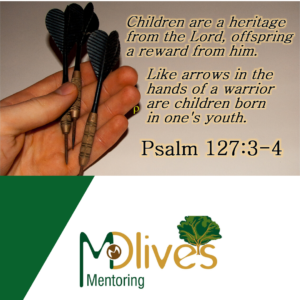
The Bible has a strong message on how valuable our children (read youth as well) are-Psalm 127:3-4; ‘Children are a heritage from the Lord, offspring a reward from him.  Like arrows in the hands of a warrior are children born in one’s youth’.

I invite you to consider our youthful population an asset; Let us nurture and invest in them, Let us make them lead and not wait to see what will happen if we do not invest in them, Let us consider them a blessing and not a curse.  They are our children, our heritage![/vc_column_text][/vc_column][/vc_row][vc_row][vc_column width=”1/2″][vc_single_image image=”620″ label=””][/vc_column][vc_column width=”1/2″][/vc_column][/vc_row][vc_row][vc_column][vc_column_text]Mary Kamore is the Lead Consultant M-OliveS Mentors[/vc_column_text][/vc_column][/vc_row]

Share this cohort:

IWD: JESUS ‘A LIBERATOR OF WOMEN?’

[vc_row][vc_column][vc_custom_heading text=”IWD: JESUS ‘A LIBERATOR OF WOMEN?’” font_container=”tag:h2|text_align:left|color:%232d6523″ use_theme_fonts=”yes”][vc_column_text]Women Liberation may sound modern, ungodly and feminist. But did you know that it is as old as Christianity and it was at the center of Jesus Ministry? When Jesus walked the earth, He did not only confront the culture, heal the sick and raise the dead but also liberated the oppressed and set the captives free. Women were at the top of his list!
Consider the story of Lazarus, where Jesus had an encounter with Mary and Martha as reported by John in the apostles. When Jesus received the report that Lazarus, the brother to Mary and Martha, was deathly ill He purposely delays His visit two more days so that Lazarus would die (John 11:6). When He (Jesus) finally shows up Martha is upset with His delayed response and says so (John 11:21). Mary on the other hand is weeping, broken with despair and full of emotion. In anguish she falls down at His feet, and through her tears she utters, “If you had been here, my brother would not have died”(John 11:32). In response Jesus embraces Mary in the midst of her grief and weeps with her, ‘Jesus wept’. Note that mourning was women’s work; it exposed weakness and was not the macho thing to do. Still, Jesus wept. His weeping sent a message to Mary, to women everywhere and to the watching crowd. He was saying, ‘I value emotion, I feel your pain and I understand your sorrow” Finally, deeply moved within, Jesus arrives at the tomb and says, “Remove the stone”…The rest is History.
What about the story of Mary stepping into a room with perfume worth a year’s wages? With all the disciples watching she gets down on the floor and began to pour this expensive perfume over Jesus feet, wiping them with her hair. The men begin to complain about the poor stewardship of wasting expensive perfume… and Jesus responds, “…Wherever this gospel is preached in the whole world, what this woman has done will also be spoken of in memory of her” (Mathew 26: 10-11, 13). Does it begin to make sense? When the Pharisee’s brought a woman caught in adultery to Jesus but did not bring the man, they were not only upset about Jesus forgiving the guilty; they were angry that He was honoring and empowering women.
I can go on and on how Jesus protected the feelings of women, valued their passions and validated their actions. In all this Jesus was sending a clear message that it takes both the femininity of women, whom they oppressed and the masculinity of men to represent God. “God created man in His own image, in the image of God He created him, male and female He created them” (Genesis 1:27). It is no doubt that by empowering and according full recognition to women we are embracing the full scale of the nature of God.
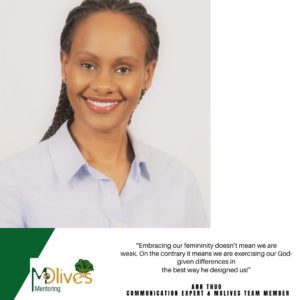
“Isn’t it amazing that the first person who designed us equal was God? We certainly are different in many ways – physically, emotionally and many other areas – but we are definitely equal in value. Embracing our femininity doesn’t mean we are weak. On the contrary it means we are exercising our God-given differences in the best way he designed us!” Ann Thuo, Communication Expert & MoliveS Team Member[/vc_column_text][vc_row_inner][vc_column_inner width=”1/2″][vc_single_image image=”835″ label=””][/vc_column_inner][vc_column_inner width=”1/2″][/vc_column_inner][/vc_row_inner][vc_column_text]Mary Kamore is the Founder and Lead Consultant, M_OliveS Mentors[/vc_column_text][/vc_column][/vc_row]
Share this cohort:

Guard it!

[vc_row][vc_column][vc_custom_heading text=”Guard it!” font_container=”tag:h2|text_align:left|color:%232d6523″ use_theme_fonts=”yes”][/vc_column][/vc_row][vc_row][vc_column][vc_column_text]I have a set of chairs that is close to 20 years old. It happens to meet the bare minimum on comfort and presentability. It is not modern, though, and subsequently not one that would catch your flavor and especially if you have a taste of attractiveness. I have made attempts to change the chairs but every time I do, my resolve gets hijacked by the assumed time, effort and money it will take to get a new one. It is in this state of ramble that an alternative is born; ‘fix the seat!-do a bit of make-over here and there and the seat will be good to go.
The truth is it is very expensive to buy new items (besides chairs), not only in terms of money but time, effort and emotional commitment.  Before our mind settles on stuff alone the same applies to associations. There are relations I will do all I can to keep because if lost the cost to replace is too high if at all. What about my marriage relationship? This I jealously guard, reason being if lost it is irreplaceable, no amount of money, time or effort would replace.

Our theme this week is customer retention and we summed it to say it is six to seven times more expensive to attract a new customer than it is to retain an existing one. In fact you have a higher probability of winning back a lost customer than converting a prospect into a first-time buyer. That is why win back programs like rebranding, special discounts, incentives and targeted services are popular among them that understand that an existing customer is a treasure to preserve.

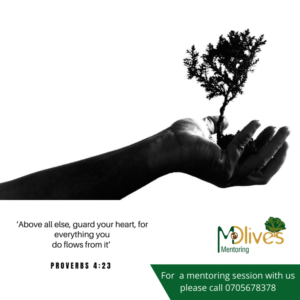
The Bible is not silent on this either, ‘Above all else, guard your heart, for everything you do flows from it’ Proverbs 4:23. It appreciates how important it is to care for what matters most.

May it be an item, a relationship or a customer it is important to embrace this truth- that losing them could bring you emotional, material or financial dip that would take years to fill. This way you would do whatever it takes to preserve that item, guard that relationship and win back that customer.  Are you guarding that which matters to you?[/vc_column_text][/vc_column][/vc_row]

Share this cohort:

Inviting the unfamiliar

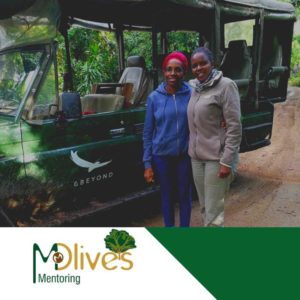
[vc_row][vc_column][vc_custom_heading text=”Inviting the Unfamiliar” font_container=”tag:h2|text_align:left|color:%2381d742″ use_theme_fonts=”yes”][/vc_column][/vc_row][vc_row][vc_column][vc_column_text]“I chose to do what many girls in my community will not do. You see in my Masaai community girls’ education is not that important that’s why we are married off at a very early age. Those who are lucky to pursue education they don’t take up ‘men’ careers like I have done. So when I decided to become a tour guide and a driver my family considered me an outcast, they almost disowned me and up to today I don’t have a relationship with my father. I understand why he feels disappointed; I brought shame on him and has nothing to show about me according to our culture. I am, however, determined to show my father and my community that girls have rights too” .As Ann Tumpesia, my Tour Guide, said all this she did not take her eyes off the murky terrain that we had to cruise during this wet morning game drive at the Masaai Mara Game Reserve.  She also elicited high level of confidence being in control of the four wheel land cruiser that had just the two of us on board. For some reason I felt safer oblivious to the fact that she was a stranger in unfamiliar environment.

It happened that this was my last day at the camp and I desired to have a game drive before embarking on my journey back home. However, after a whole night of heavy rains, I didn’t think this would be possible until the camp administrator assured me it can be done. He went further to introduce me to my guide cum driver who, to my surprise, was a young lady standing next to me with a beautiful smile ready to offer the needed service. That was Tumpesia and within no time we were on the road penetrating through the savanna, the mud and the floods notwithstanding. Before we hit the bush, Tumpesia was clear on what to expect; ‘I will see all the animals there is to see’, ‘I will be safely driven’ and ‘I will be a happy customer’. This was accomplished as she talked freely with me you would mistake us for old friends. “You know I was so happy to be awarded the Tour Guide of the Year by the company”, her final words as Tumpesia escorted me back to the camp.

Mission was accomplished with a plus; I had loads of lessons to learn from the young lady. Our two hour moment beat one semester in class learning a module I would call “Inviting the unfamiliar”. I’ll share three; First, Tumpesia knew too well that going against the norm would attract rejection and ridicule from her own people, but she did it anyway. Two, while it was more comfortable to stay within the limits she risked being different-She stepped out of her comfort zone. Three, she trained herself to thrive in new ways and as William Faulkner puts it she realized that “She cannot swim for new horizons until she has courage to lose sight of the shore”.  “When I started to support my family financially, they began to respect me; they now look at me differently. My mission is to encourage girls to go to school; I even pay fees for those whose parents can’t afford”

There is a story in the Bible where Jesus asked Simon to do the unusual. Fishing in broad daylight is pretty pointless. The best times to fish are late into the night or very early in the morning which is what Simon and his companions had done. Here Jesus comes (a carpenter, mind you) and is telling Simon (the master fisherman) that he needs to cast the net and fish again. Luke 5:4 “When he had finished speaking, he said to Simon, “Put out into deep water, and let down the nets for a catch.” It is no wonder that Simon’s excuses flowed so easily, “…We haven’t caught anything all night” but then in the end he complies, “..But because you say so, I will let down the nets” What happens when Simon complies by ‘launching into the deep’? They were astonished at the size of the catch of fish (see Luke 5:9)!

The deep is where you will find a whole lot of fish. You won’t find them near the shore in shallow waters. But to launch out into the deep is to move away from the comfort of the shoreline-It is to ‘Invite the unfamiliar’ like Tumpesia my friend and Simon in the Bible did. You, too, would you chose today to move out of your comfort zone and launch into the deep-Invite the unfamiliar? You will be astonished at your catch![/vc_column_text][/vc_column][/vc_row][vc_row][vc_column width=”1/2″][vc_single_image image=”835″][/vc_column][vc_column width=”1/2″][/vc_column][/vc_row][vc_row][vc_column][vc_column_text]Mary Kamore is the Founder and Lead Consultant, M_OliveS Mentors[/vc_column_text][/vc_column][/vc_row]

Share this cohort:

Building your organizational capacity through Team Building

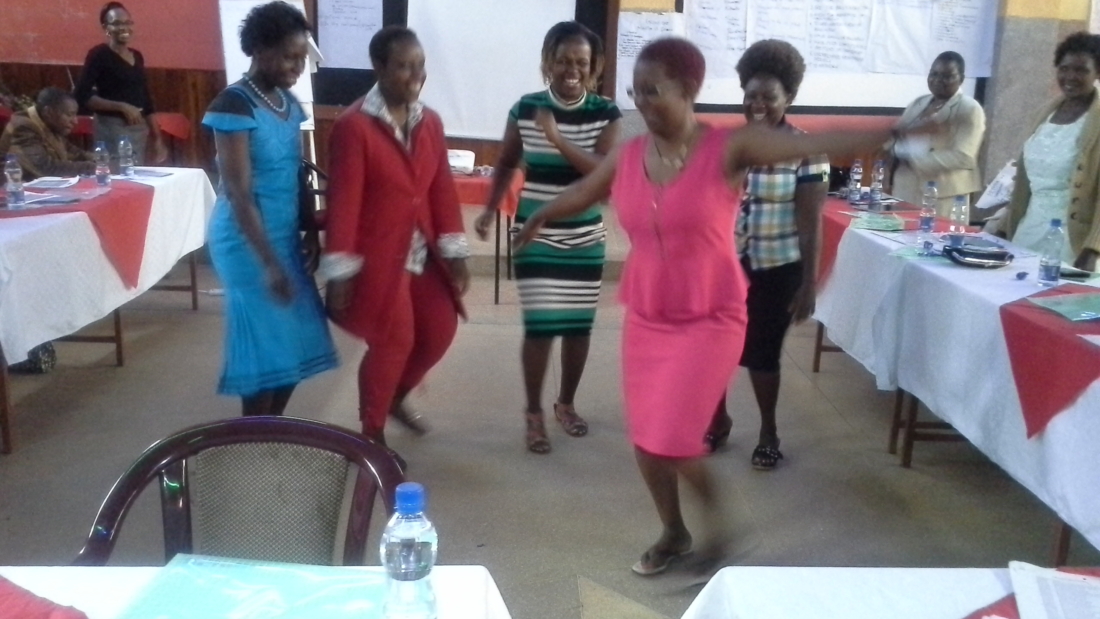
[vc_row][vc_column][/vc_column][/vc_row][vc_row][vc_column][vc_custom_heading text=”‘It is worth every penny’” font_container=”tag:h2|text_align:left|color:%2345731f” use_theme_fonts=”yes”][vc_column_text]For a small team one would not think that team building is of much significance neither would they be keen to spend money and time on that. But my view on this was challenged this week when the owner of a Business that has less than ten employees asked me to facilitate a staff capacity and team building retreat for the team. I gladly took it up with my focus biased towards capacity rather than team building. At the end of the retreat I asked the team to fill in an evaluation tool that had four questions, two of which were; ‘What stood out for you during this retreat? and, ‘What improvement would you want to see in the next retreat? For the former 80% of the team indicated team building activities is what stood out for them, mind you I was biased so the activities were few. For the latter an almost equal percentage indicated that they would want more team building activities and less of training in the next retreat, I was embarrassed. While I tackled other sessions during this retreat that were quite relevant and interesting, it turned out that these ‘fun’ activities that can pass for ‘time wasters’ is what the team appreciated most.
It is no wonder that team building is one of the most widely used group-development activities in organizations and is said to have the strongest effect (versus financial measures) for improving organizational performance. With the time we spend with our employees, the benefits of investing time and money in teambuilding cannot be overemphasized. Some of the benefits of team building include; responsive and meaningful communication, facilitates collaborative and motivated work culture, identifies and develops strengths of the team members, creates self-awareness of one’s own strengths and weaknesses, helps in problem-solving and decision making, boosts morale and job appreciation, helps in creativity, innovation and out of the box thinking, enhances productivity and improves organizational performance.
You may consider one or more of the following approaches;

  • Interpersonal-relations; This emphasizes increasing teamwork skills such as giving and receiving support, communication and sharing. Teams with fewer interpersonal conflicts generally function more effectively than others.
  • Problem solving; This emphasizes identifying major problems within the team and working together to find solutions. This can have the added benefit of enhancing critical thinking & creativity
  • Role clarification; This emphasizes improving team members’ understanding of their own and others’ respective roles and duties. It also emphasizes the members’ interdependence and the value of having each member focus on their own role in the team’s success.
  • Setting Goals; This emphasizes the importance of setting clear objectives, individual, team and organizational goals. Team members become involved in action planning to identify ways to define success and failure and achieve goals.

I applaud my client who did not hesitate to invest time and money in building their ‘small team’; it was worth every minute and every penny. Isn’t it possibly time that you considered investing time and money in your valuable team regardless of how few/many they are?[/vc_column_text][/vc_column][/vc_row][vc_row][vc_column width=”1/2″][vc_single_image image=”835″][vc_column_text]Mary Kamore is the Founder and Lead Consultant, M_OliveS Mentors[/vc_column_text][/vc_column][vc_column width=”1/2″][/vc_column][/vc_row]

Share this cohort: