
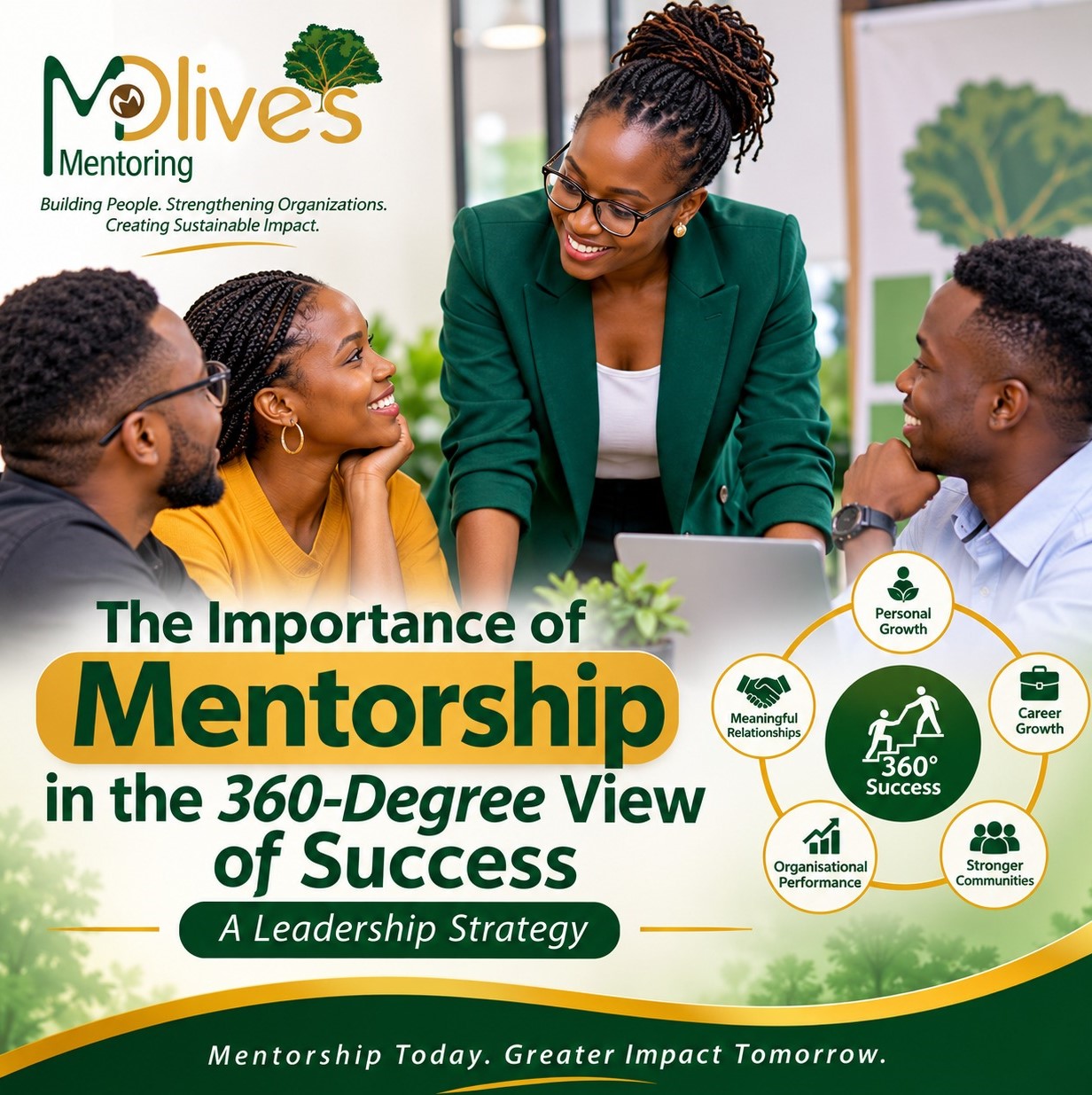
The Importance of Mentorship in the 360-Degree View of Success: A Leadership Strategy
Introduction
Success is often measured through visible achievements such as career advancement, financial growth, business performance and professional recognition. However, true success goes beyond individual accomplishments. It is multidimensional, involving personal growth, professional development, effective relationships, organisational performance and the ability to create meaningful impact in society.
This is where mentorship becomes an essential leadership strategy. It provides individuals with the guidance, knowledge, accountability and support needed to navigate different stages of their personal and professional journeys. Through mentorship, success is no longer viewed as an individual destination but as a continuous process of growth, development and shared achievement.
Understanding Success Through a 360-Degree Perspective
A 360-degree view of success recognises that sustainable achievement requires attention to different dimensions of life and leadership. These dimensions are interconnected, and weakness in one area can affect performance in another.
Some of the key dimensions include:
1. Personal Development
Effective leadership begins with self-awareness. Individuals need to understand their strengths, weaknesses, values, emotional intelligence and areas requiring improvement. Mentorship creates an environment where individuals can reflect, receive constructive feedback and develop the confidence to become intentional about their growth.
2. Professional and Career Growth
Professional success requires more than technical expertise. It involves communication, decision-making, adaptability, strategic thinking and the ability to navigate workplace dynamics. A mentor provides valuable insights, shares experiences and helps mentees identify opportunities that align with their career aspirations.
3. Leadership and Organisational Growth
Leadership is not simply about holding a position of authority. It is about influencing people, building trust, managing teams and creating an environment where others can thrive. Mentorship strengthens leadership capacity by equipping current and emerging leaders with the skills needed to lead people and organisations effectively.
4. Relationships and Social Impact
Success is also reflected in the quality of relationships we build and the impact we have on others. Mentorship encourages collaboration, networking, knowledge sharing and the development of supportive professional communities. It reminds leaders that growth should not be limited to personal achievements but should extend to empowering others.
5. Financial and Strategic Well-being
Financial literacy, resource management and strategic planning are important components of sustainable success. Through mentorship, individuals can gain perspectives on financial decisions, business development, entrepreneurship and long-term planning.
Mentorship as a Leadership Strategy
Organisations and individuals that intentionally integrate mentorship into their leadership strategies create opportunities for continuous learning and leadership succession.
Mentorship provides a structured approach to transferring knowledge, developing talent and preparing individuals to take on greater responsibilities.
Here is how it contributes to effective leadership:
Building Self-Aware Leaders
Mentors challenge individuals to examine their leadership styles, recognise blind spots and understand how their decisions influence others. This promotes responsible and emotionally intelligent leadership.
Strengthening Decision-Making
Leadership involves navigating uncertainty and making decisions that affect people, resources and organisational direction. Through shared experiences and guided conversations, mentors help mentees develop critical thinking and sound judgement.
Developing High-Performing Teams
A strong leadership culture recognises that people are an organisation's greatest resource. When leaders embrace mentorship, they create opportunities for employees to develop their skills, understand organisational expectations and contribute more effectively to team objectives.
Promoting Leadership Continuity
Organisations cannot depend solely on existing leadership. They must intentionally prepare the next generation of leaders. Mentorship supports succession planning by transferring institutional knowledge, strengthening leadership capabilities and creating a pipeline of competent individuals ready to take on leadership responsibilities.
Creating a Culture of Accountability
Mentorship encourages individuals to set meaningful goals, track progress and take responsibility for their development. This accountability helps translate learning into measurable action.
Moving from Individual Success to Collective Impact
One of the greatest values of mentorship is its ability to create a ripple effect. When an individual receives guidance and develops their leadership capacity, they become better positioned to influence their teams, organisations, families and communities.
A mentored leader can become a mentor to someone else. A strengthened team can contribute to a stronger organisation. A well-led organisation can create opportunities, improve workplace culture and contribute to broader economic and social development.
This is how mentorship becomes more than a personal development initiative. It becomes a sustainable leadership investment.
However, effective mentorship requires intentionality. It should not be reduced to occasional conversations or the exchange of advice. It requires commitment, clearly defined development objectives, meaningful engagement, continuous feedback and opportunities to apply what has been learned.
Making Mentorship Part of Your Leadership Journey
Whether you are an emerging professional, an established leader, an entrepreneur or an organisation seeking sustainable growth, mentorship should be viewed as a strategic investment rather than an optional activity.
Consider these questions:
Are you intentional about your personal and professional development?
Do you have people who challenge your thinking and hold you accountable?
Are you creating opportunities for others to grow through your leadership?
Does your organisation have a structured approach to developing future leaders?
Are you measuring success beyond financial and professional achievements?
The answers can help you identify where mentorship can make a meaningful difference.
Conclusion: Success Is a Journey of Continuous Growth
A 360-degree view of success reminds us that achievement is not defined by one milestone, one position or one aspect of life. It is reflected in how we grow, how we lead, how we relate with others and how we contribute to the success of those around us.
Mentorship provides the guidance and strategic support needed to navigate this journey. It develops individuals, strengthens leadership capacity, builds resilient organisations and creates a culture where knowledge and opportunities are shared.
Ultimately, great leadership is not measured only by what a leader accomplishes but also by the people they develop, the capacity they build and the legacy they leave behind.
At M_OliveS Mentors, we believe that sustainable success begins with intentional growth, strengthened through mentorship and realised through purposeful leadership