463by348

YOU HAVE HIGH LEVEL OF EMOTIONAL INTELLIGENCE(EQ)

“Congratulations! You have high emotional intelligence. This is good news! EQ counts for twice as much as IQ and technical skills combined in determining who will be a star performer. Your level of EQ likely has been and will be a driver of your high performance under pressure for years to come”

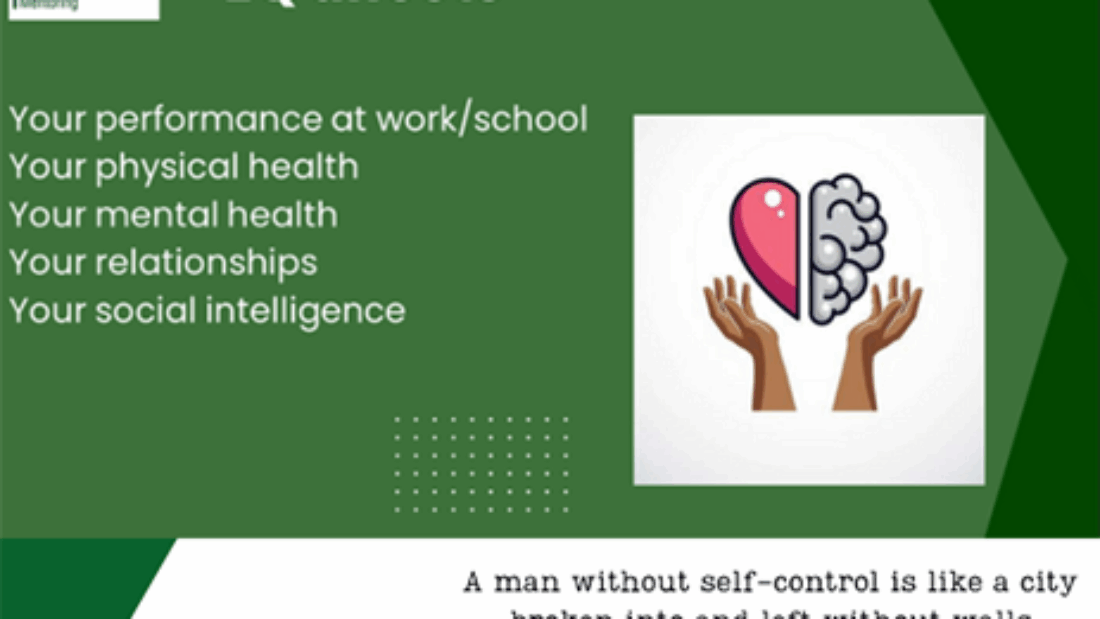
These were my results when I recently did an online Emotional Intelligence (EQ) test. But it has not always been like this. I remember the first time I did the test I scored low-mid range EQ. However, being one who is interested in developing others I cannot afford to take lightly my EQ. I, therefore, took some steps towards improving my EQ. The first thing I did was to increase my self-awareness i.e. giving attention to how my thoughts and my feelings are related. For example, I observed that it makes me sad when my values are compromised. Next I learned how to label my feelings and their root emotions; being able to pinpoint what I feel and establish which emotion initiated that feeling. This includes paying attention to how often I experience the feeling/emotion. For instance feeling sad because my values have been compromised does not necessarily mean I am bored. This was followed by seeking to understand what triggers certain emotions; is it because certain values were not honored or is it due to unmet expectations? This helped me to reduce the threshold of my triggers, for instance reviewing my expectations or setting boundaries. As a result I was able to reduce on my impulse responses and decrease my later regrets. I also discovered that talking about or doing something about my feelings is very healthy. On the other hand bottling these feelings is unhealthy. I have learned to use my voice in a healthy assertive way to protect my values, beliefs, wants and needs while remaining respectful and positive. Most importantly and what I would refer to as the icing on the cake is learning to regulate my emotional responses and allowing myself time to choose among alternative options. To mention just a few, what has worked for me here include; pausing before responding, exploring different options, distracting myself with something more pleasant, e.g a hobby, and asking for help. I have learned to appreciate that it is ok not to know and asking for help is not a weakness.

One of observation I have made over time is that the higher one’s level of emotional intelligence (EQ) the closer they are to living life to their full potential. As William James said: “I have no doubt whatsoever that most people live, whether physically, intellectually, or morally, in a very restricted circle of their potential being…We all have reservoirs of life to draw upon, of which we do not dream.”

Reflection

A man without self-control is like a city broken into and left without walls-Prov 25:28


Mary Kamore is the Lead Consultant M_OliveS Mentors
Share this cohort:
today

QUESTIONING & LISTENING SKILLS

[vc_row][vc_column][vc_column_text]

In my mentoring experience I have found myself in a situation where the mentee wants to talk to me about a difficult or an uncomfortable issue. In such a situation questioning plays an important role in helping to encourage the mentee to reflect back over the situation and think about potential resolutions or behavior changes. Effective questioning though important in many aspects of our lives is of a particular significance when it comes to your role as a mentor. Being able to ask the right questions at the right time and in the right way will help you and your mentee talk about what’s going on and help you in guiding a conversation in the direction that’s required. If you ask the wrong questions, you’ll probably get the wrong answer, or at least not quite what you’re hoping for! Appropriate questions can trigger reasoning, creativity and other higher level thinking skills.

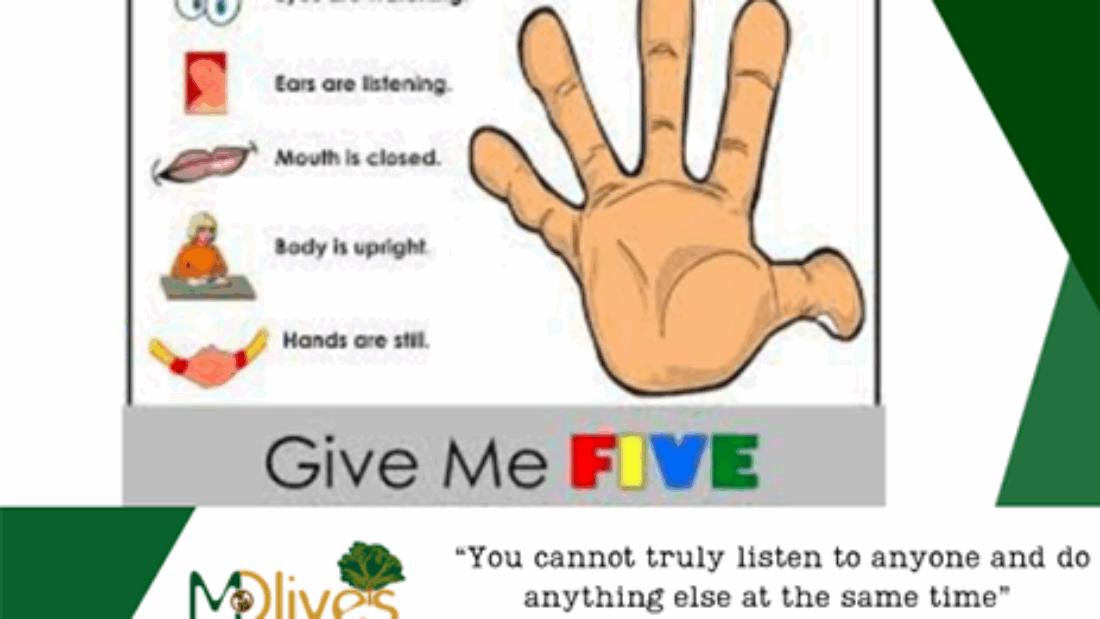
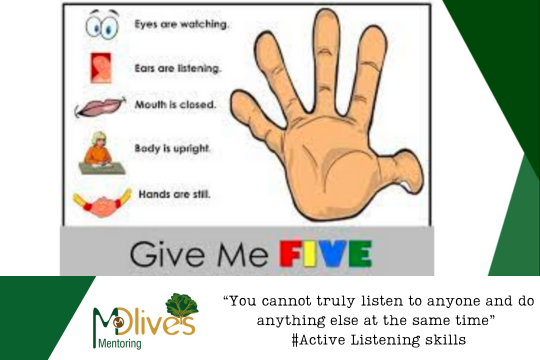
I have also learned that when you ask questions it is important to try not to ask more than one question at a time so that the other person has time to respond to it. Furthermore if you make it a habit to ask question in every conversation you improve your listening skills. Active listening like questioning is another core skill for being an effective mentor. Active listening is a technique where you completely concentrate on what is being said and observe non-verbal cues like body language. You listen with all your senses without being judgmental. Some active listening techniques include; maintaining good eye contact, being fully present, asking open ended questions, reflecting what you hear, being patient and paying attention to non-verbal cues.

I fully agree with M. Scott Peck “You cannot truly listen to anyone and do anything else at the same time”. Would you, then, make a choice to be intentional in developing your questioning and listening skills?

Reflection
My dear brothers and sisters, take note of this: Everyone should be quick to listen, slow to speak and slow to become angry. James 1:19

Mary Kamore is the Lead Consultant M_OliveS Mentors[/vc_column_text][/vc_column][/vc_row]

Share this cohort:
banner

The GROW Model; I USE IT ON SELF BEFORE USING IT ON OTHERS

[vc_row][vc_column][vc_column_text]

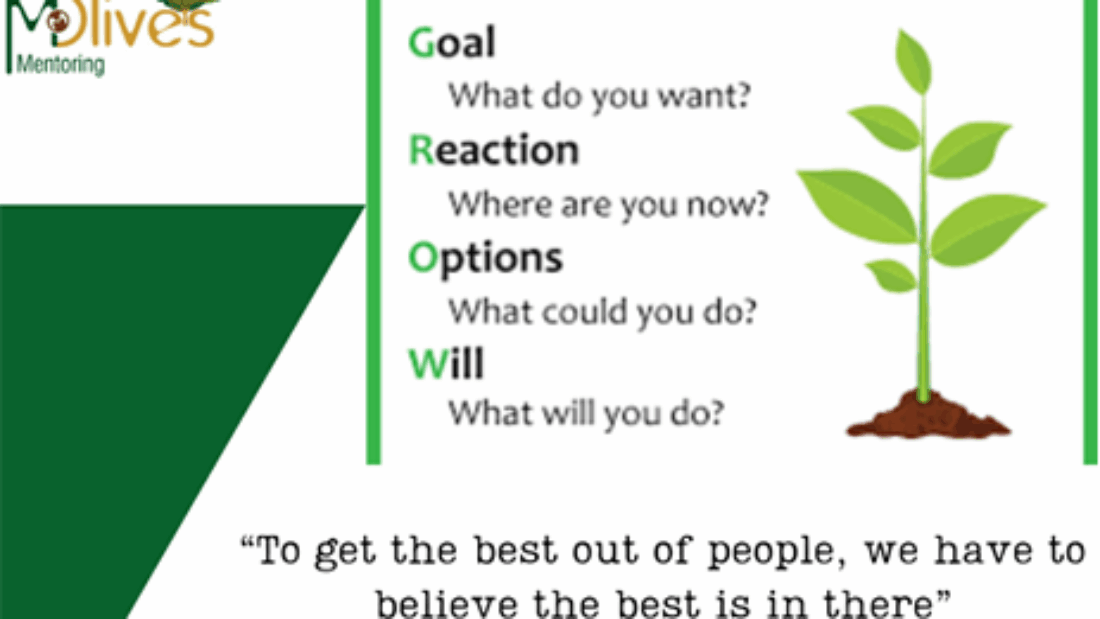
  • Goal.
  • Current Reality.
  • Options (or Obstacles).
  • Will (or Way Forward).

A good way of thinking about the GROW Model is to think about how you’d plan a journey. First, you decide where you are going (the Goal), and establish where you currently are (your current Reality). You then explore various routes (the Options) to your destination. In the final step, establishing the Will (Wayforward), you ensure that you’re committed to making the journey, and are prepared for the obstacles that you could meet on the way.

I have learned that one great way to practice GROW is by addressing my own challenges and issues. First I identify an issue that I am struggling with or something I am not very happy about and would want to change. I then take myself through the GROW model. What is my Goal?; How will I know the problem has been solved? I can’t reach my goal, though, without considering where I am now. Hence, the next thing to consider is my Reality; what is happening now? Next I will explore all the possible Options for reaching my goal; What can I do? What else can I do? Having examined the current reality and explored possible options, I now have a good idea of how I can achieve my goal. However, much as this is great it is not enough and I need to get into the final step which is to commit to a specific action or actions. Only then can I move forward towards my goal. I need to ask myself what will I do next and when? How do I review progress and who will hold me accountable?

By practicing on my own and getting myself “unstuck,” I learn how to ask myself the most helpful questions. These are the questions I write down as prompts for future mentoring sessions.

Reflection

“A wise man will hear and increase in learning, and a man of understanding will acquire wise counsel.” – Proverbs 1:5

Mary Kamore is the Lead Consultant M_OliveS Mentors [/vc_column_text][/vc_column][/vc_row]
Share this cohort:
463by348

‘DON’T QUIT’, GO AHEAD AND FAIL!

I was once very good at riding a bicycle. That was when I was way young, at about 10 years of age. At our home, then, it was common for us to use bicycles to run errands like fetching water, picking groceries from the market or just move from one place to another including going to school. I really loved it because it was also prestigious in the village to be riding a bicycle instead of walking. One day as I was running one of those errands I accidentally fell and got hurt. The accident left me with scars on both hands and one of my legs. It wasn’t so bad, though, so healing was quick. Something else happened; the accident left me with a scar of shame that took so long to heal. You see, when I fell there were people nearby and a few boys in their midst laughed so loudly that their laughter remained fresh in my mind long after. It also happened that each time I met those boys they could laugh and that added salt to the injury. I made a resolve then never to touch a bicycle again. And true to my words I developed phobia for bicycles and have never confidently used one since then.


This experience reminds me what happens to us all the time; Fear of failure. Failure often brings with it shame, and we hate the feeling it brings. Shame cracks the delicate stained glass portrait of our “self” that our ego has so painstakingly created. We might also feel inadequate after a failure, thinking that the people around us might see us as “lesser”. That thought doesn’t sit well with our ego. Another crack in the glass. It is no wonder then that trying again after failure sometimes cause us so much emotional trauma. While fear is part of human nature, Fear of failure can be so strong that avoiding failure conceals the motivation to succeed. Insecurity about doing things incorrectly causes us to unconsciously sabotage our chances for success. Fear can hold you back and hence the need to urgently do something about it.


To eliminate the fear of failure it is important first and foremost to understand and appreciate that at times you will fail. Realize that you are human and humans make mistake. Before any of us learned how to walk, we crawled. We got up, fell down, got up again and continued the process until we could walk. Secondly don’t take failure personally. Instead view it as a stepping stone. Make certain to learn from it and then apply what you have learned to future situations. Refuse to consider it as a character flaw or weakness. Thirdly remember that ‘failure’ has produced many successes. Consider how many people in history had failed before they became successful. Albert Einstein, the brilliant physicist, was advised by his teacher to quit school because; “Einstein, you will never amount to anything!” while Henry Ford’s first two automobile companies failed. Lastly believe in yourself. Rather than giving up when things don’t work out, take it as an opportunity to build perseverance and resolve. Know that you have got what it takes to work through those obstacles and hard times. Please ‘Don’t quit’, Go ahead and fail!
And for me? I am definitely going back to my love for the bicycle!

Reflection
For God has not given us a spirit of fear, but of power and of love and of a sound mind-2Timothy 1:7
Mary Kamore is the Lead Consultant M_OliveS Mentors
Share this cohort:
featured image

THE BIRTH OF MY PASSION

[vc_row][vc_column][vc_column_text]

Since I was a young girl, I hated to see people sad or in tears. I recall this one time when something missed from our house, I can’t quite remember what it was. My father, who always insisted on strong values like honesty and openness, demanded to know who took the item. We were four of us; my two brothers, my cousin who lived with us then and myself. Our baby brother was too young to be involved in the whole saga. Repeatedly my dad asked, “WHO TOOK IT?” After several attempts with no one owning up he opted for King Solomon’s wisdom; ‘cane us in turns until we own up’. He also clarified the order in which his plan was to be executed; ‘five strokes each to start with’, ‘oldest first and the youngest last’. If my cousin was not with us then I would have been the first to receive my portion. No sooner had my dad positioned himself well for the task than our tears started flowing freely. Silently so because if you cried loudly that meant an additional stroke on top of the five. No amount of pleading with my dad could soften his heart.

My cousin was done pretty fast with her five and she bravely bore the pain with no much drama. It was now my turn but unlike my cousin I couldn’t take mine without drama, never mind that it was of little help.  Soon I was done; I looked back at my brothers who were waiting on the line. When their teary red eyes locked mine, I couldn’t take it anymore and right there and then I knew I needed to do something.  I requested my dad to stop since I have something to say. He stopped and furiously looked at me waiting to hear what I had to say. “I DID IT DAD”, I said incoherently. This only added fuel to his anger and he wondered aloud why I did not confess earlier. I just stood there like a zombie still nursing my pain from the just received strokes. After all I had nothing to say because I just confessed to something that I never did. I was ready to take another stroke but for whatever reason my dad abandoned his mission right there and then. I guess some divine voice must have told him, I was innocent.

I wish to stop the story there since that part alone suffices for my message. I have taken the bullet for others many times in my life but this particular one stood out. Way later in life I came to realize that these incidences marked the birth of my mentoring passion. First let me make it clear that it is my responsibility as a mentor to challenge my mentee to take responsibility for their own mistakes, meaning as a mentor I should not do what I did for my brothers. Having said that, however, it is my responsibility to walk my mentee out of the tears and to make sure that they do not go back to the same path that caused them those tears in the first place. I will have failed terribly as a mentor if I stood and watch my mentee suffer only for me to say, ‘they deserve it’ or cite the old adage, ‘experience is the best teacher’

To fuel this mentoring passion I invested in mentoring skills and I must say that this is one of the best decisions I have ever made. Having passion for something is one thing and having the knowledge or the skills to do it is another, YOU NEED BOTH.


‘It is the ultimate luxury to combine passion and contribution. It’s also a very clear path to happiness’ Sheryl Sandberg


Sign up for our mentoring training program where you will acquire the needed mentoring skills. You will simply learn from the best.  Click on the link below to register

https://forms.gle/TZNXta2X3vZxZhnM6


Mary Kamore is the Lead Consultant M_OliveS Mentors [/vc_column_text][/vc_column][/vc_row]

Share this cohort:
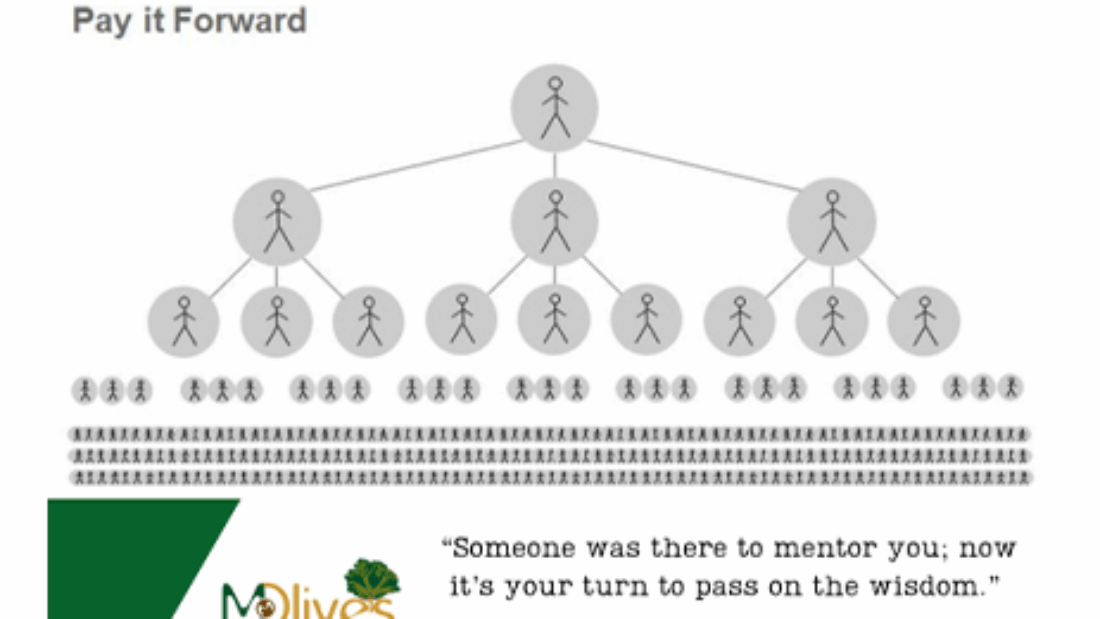
paying it forward

PAYING IT FOWARD

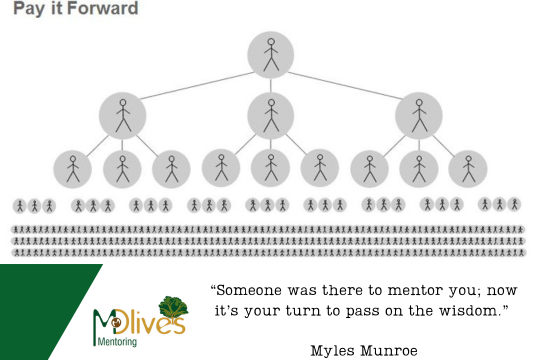
I get several opportunities to train mentors, something I truly appreciate. Every time I stand in front of a team of mentors three quotes by Myles Munroe find their way into my session;

“The greatest act of leadership is mentoring”. No matter how much you may learn, achieve, accumulate, or accomplish, if it all dies with you, then you are a generational failure”

“The value of life is not in its duration, but in its donation.”

“Jesus did not build buildings he build people”

Mentoring calls for commitment to impacting the next generation, ensuring that our dreams are carried forward as opposed to dying with us. It also calls for having our focus on people as opposed to ‘buildings’ or ‘objects’.  This is not easy in a world where success is measured by how much we achieve, accumulate or accomplish and everyone seems to be in a race to outdo the other based on these parameters. Another reason why mentoring doesn’t come easy is because it requires you to take love for people to a level where you share your life with them. I see this very well put by Paul in 1Thess 2:8; ‘Having so fond an affection for you, we were well-pleased to impart to you not only the gospel of God but also our own lives, because you had become very dear to us’. When you are a mentor your life becomes the mirror through which your mentees examine their own lives.

However, the benefits of mentoring far outweigh the challenges. Words cannot be enough to express the fulfillment that comes with mentorship. I can wake up to an early morning mentoring session that no one will pay a coin for and still feel motivated enough to do it again the following morning. Imagine how fulfilled Barnabas was to see who Paul, his mentee, became in the ministry?  Same applies to Paul on seeing Timothy, his son in the faith, blossom. Just seeing your mentee unleash their full potential is enough reason to downplay any constraints that comes with it. Like my mentor once told me, ‘Die empty’. Do not let all that knowledge, experience, skills and wisdom end with you-PAY IT FORWARD!


Reflection

‘Having so fond an affection for you, we were well-pleased to impart to you not only the gospel of God but also our own lives, because you had become very dear to us’-1 Thess 2:8


Mary Kamore is the Lead Consultant M_OliveS Mentors

Share this cohort:
climte

SUSTAINABLE AND CLIMATE RESILIENT AFRICA

The theme for the Africa Climate Summit (ACS) 2023 is ‘Driving green growth & climate finance solutions for Africa and the world’.  The summit, currently being hosted in Kenya, calls upon African leaders to pledge and commit towards the Implementation of climate actions framework.  During the opening ceremony I listened to one speaker after another and they all spoke in one voice, ‘The need for a Sustainable and Climate resilient Africa’. It is unfortunate   that while Africa has negligible contribution to climate change, it stands out as the most vulnerable and faces the worst impacts of climate change. Fueling this vulnerability is the low levels of Economic growth in Africa and while climate change is a global challenge, the poor are unreasonably susceptible to its effects.

In his speech our President, His Excellency Dr William Samoei Ruto underscored the summit aim which is to unite us across boarders in envisioning a ‘climate proof future for all’. You could, however, be thinking that you are powerless against climate change and that there is very little that one person can do. This, however, is not the case. I invite you to look at some of the things you can do at an individual level to fight climate change.

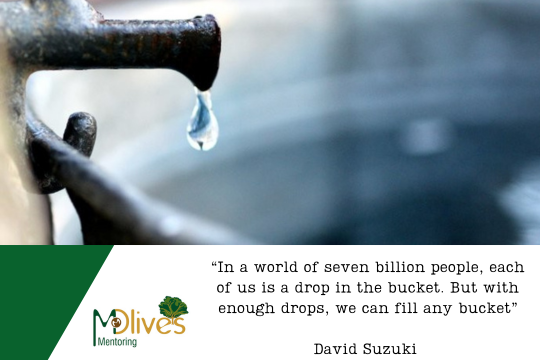
One is to use energy wisely; as environmentalist David Suzuki says, “In a world of seven billion people, each of us is a drop in the bucket. But with enough drops, we can fill any bucket”. Small energy savings can gradually add up to protect the environment. This will save you money as well e.g. use of energy saving bulbs. Two is reducing emissions; choose to use your car less whenever possible and instead use sustainable transportation like bicycling or public transport. Three is putting into practice the 3Rs of sustainability; Reduce-consume less more efficiently, Reuse– giving new life to items that are no longer in use and Recycling-packaging, waste from electronic, garbage recycling etc. Four is watching your diet; reduce your consumption of meat (livestock is one of the biggest contaminators of the atmosphere) and increase your consumption of fruits and vegetables. Also avoid excessive packaging and processed foods. Five and the last one is acting against forest loss-use sustainable wood, plant trees and create your own green spaces.

Like World Vision believes, ‘every child deserves a healthy and safe environment now and a sustainable future’. The onus is onus is on you and me to guard the environment and ensure a sustainable future.

Reflection

The Lord God took the man and put him in the Garden of Eden to work it and take care of it.- Genesis 2:15 NIV


Mary Kamore is the Lead Consultant M_OliveS Mentors


Share this cohort:
THE BOARD AND THE CEO

THE BOARD AND THE CEO

[vc_row][vc_column][vc_column_text]

For an organization to thrive, a healthy Board-CEO relationship must be at the Centre. Creating a healthy relationship between the board and the CEO not only affects the two entities involved, but flows down to affect staff members, clients or the beneficiaries and all the organization’s stakeholders. Due to our human propensity to drift, the Board and CEO’s relationship must center on and routinely return to a shared commitment to the mission. Otherwise the organization runs the risk of bending towards the interests of individual leaders as opposed to the mission.  Healthy Boards and CEO’s understands that mission is what matters most and should never let personal ego undermine the potential of their organizations to succeed.

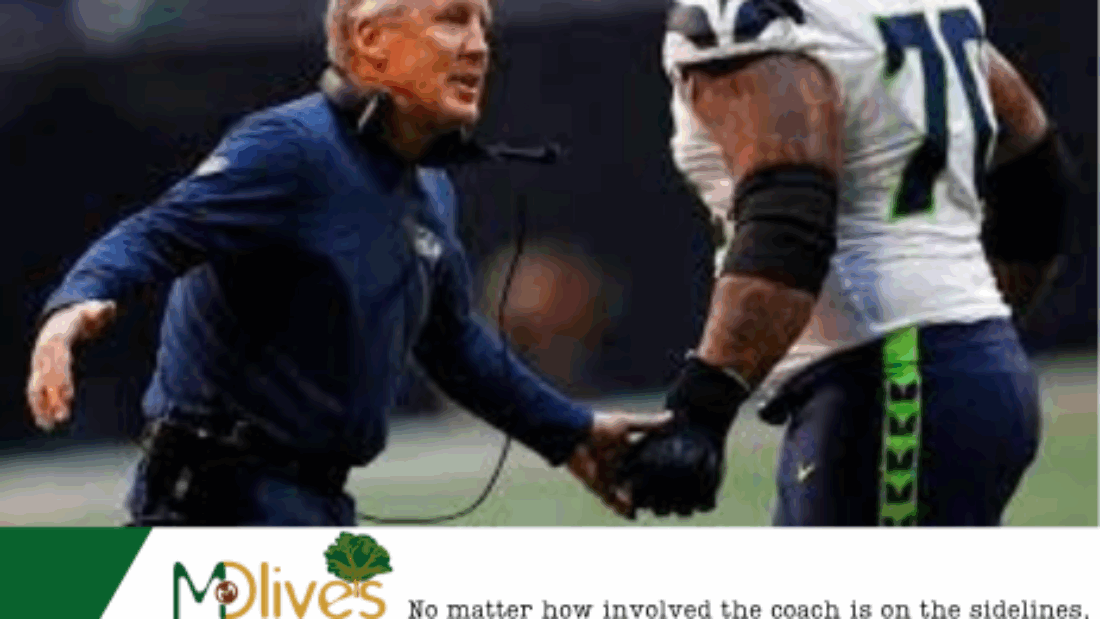
It is important for any organization to provide clarity on the roles and responsibilities of the Board and the CEO. This way everyone becomes more productive since the Board and the staff members are not spending time doing another’s work. The relationship between the Board and the CEO might be best described in terms of the relationship between the coach and the quarterback (captain). Both have a shared agenda: win the football game. There is clarity on the goal and each one of them knows they do not have the same role. The coach selects the quarterback and creates a strategy, but on game day, no matter how involved the coach is on the sidelines, you’ll never see him or her step into the playing field. The coach can shout use signal language, direct the overall play, run around but can never hit the ball. For better for worse, the field is the quarterback’s domain.

Similarly the Board functions as the coach. They select the quarterback (CEO), make game plan (set overall direction), and then empower the person to play his or her role. The Board doesn’t and should never engage in the day-to-day affairs of the organization. If the CEO is consistently not meeting performance expectations, it is time for the Board to either empower or find a new quarterback. Like this basic analogy the core roles and responsibilities of the Board and the CEO do not need to be complex but they do need to be distinct and clear.

Reflection
But all things should be done decently and in order.- 1 Corinthians 14:40


Mary Kamore is the Lead Consultant M_OliveS Mentors
 

Borrowed from the book; ‘The Board and the CEO by Peter Greer & David Weekly[/vc_column_text][/vc_column][/vc_row]

Share this cohort:
founders syndrome

FOUNDER’S SYNDROME


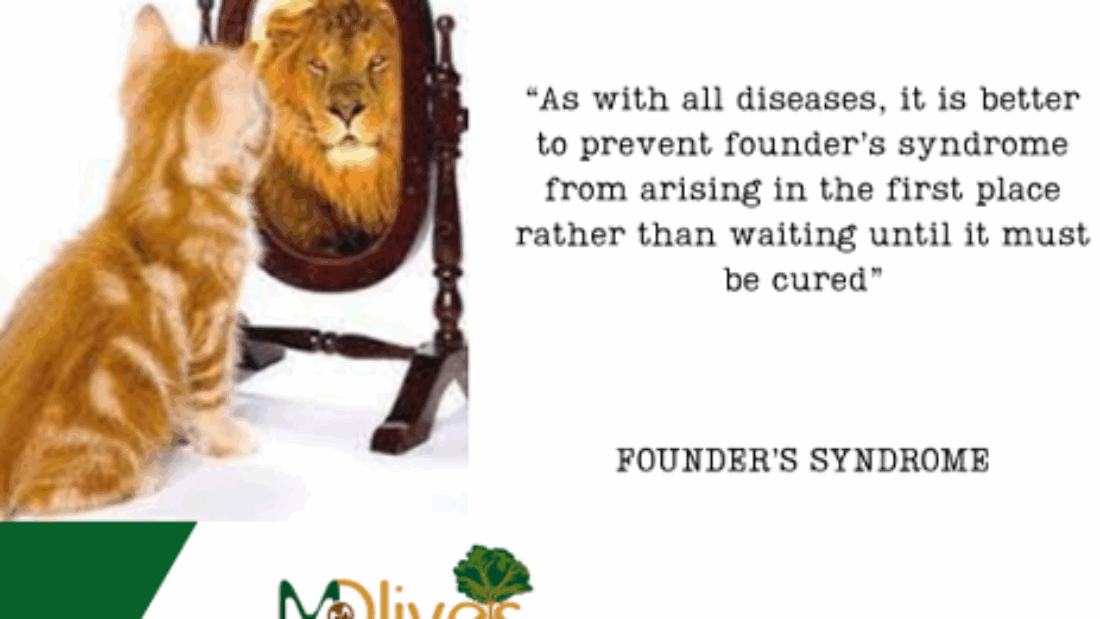
As an entrepreneur you have great characteristics; coming up with new ideas, new technologies, confident, charismatic, risk taker and the list is endless. However, these very same qualities can pose a risk to the long-term growth of your company. While making solo decisions and being inseparable from your company may have been an asset at some point, these traits will not be helpful as the company grows over time.
Think about it; What happens if you were not able to be present in your company anymore? ‘It could very well be the end of the organization’. What happens if you chose to stick around? ‘Your individual vision becomes the company vision. Alternative ideas are muted, and the business becomes more about you than the organizational mission’.
As an entrepreneur be on the lookout for these warning signs of the founder’s syndrome; The Company is largely associated with you, no strategy or planning, few systems and processes in place, lack of communication and decisions are often made in a vacuum with no collaboration or buy-in, excessive micro-management and censoring of new ideas, capable employees feel unable to contribute, irregular staff engagements where motivation is through fear and guilt, as a leader you are unwilling to ask or accept help and there is no succession plan.
“In the founders eyes there is no one who can lead, guide or grow the business like themselves and the fear that the business can be destroyed if handed over to their children or independent management is a clear and present danger to them” Carol Musyoka
Founder’s syndrome is a threatening disease since it involves founders constraining or undermining the company that they sacrificed blood, sweat and tears to build. The best method of dealing with founder’s syndrome is for it never to occur in the first place. This requires you as the founder to become more aware of your abilities and how those abilities might be constraining your company. It requires you to invest heavily in your own leadership development. It requires your board of directors to practice good governance and look after the long-term interests of the company.

Reflection
3 Do nothing out of selfish ambition or vain conceit. Rather, in humility value others above yourselves, 4 not looking to your own interests but each of you to the interests of the others.- Philippians 2:3-4

Mary Kamore is the Lead Consultant M_OliveS Mentors
Share this cohort:
blog-1-463x348

BUILDING YOUR CAPACITY

You can only grow your Business/Company to the extent that you grow yourself. The good news is that time invested into your own personal growth is completely under your control.

Here are four simple ways to build your capacity

Expand your horizons; expanding your horizons unlocks the world to you by introducing you to unusual experiences-inviting the unfamiliar into your life. Build your capacity by always striving to be just a bit outside your comfort zone. Whatever is routine in your life actually keeps you from growing in the ways you could if you did just a few things a bit differently on a daily basis.  

You cannot swim for new horizons until you have courage to lose sight of the shore”. William Faulkner

Be imaginative; all success begins as imagined outcomes, opportunities and possibilities. The more imaginative you allow yourself to be, the more open you are to creating innovative and effective problem-solving techniques. Creativity is a key trait you need to be a successful. There is no such thing as “not creative.” It is God given and we all have it.

Consistently learn; there is always something to learn-never be above education. Be passionate for acquiring and developing new skills and information. Always be searching for what is new and what is not yet fully understood in your industry. The more you learn the more you realize how much there is still to know and the more information you have available to you when making critical decisions.

Physical activity & sleep; Physical activity not only gets you in better shape, but it gives you a higher functioning brain. The brain responds best when it is full of oxygen. Secondly, working around the clock makes you as dangerous to yourself and others as someone who is intoxicated. Getting enough sleep determines your ability to sustain attention and maintain desired excellence.

“Take care of your body. It’s the only place you have to live.” Jim Rohn.

Reflection

2 Timothy 1:7 

For God gave us a spirit not of fear but of power and love and self-control.

Mary Kamore is the Lead Consultant M_OliveS Mentors
Share this cohort: